
Esports betting grew from a niche sidebar into a full market family: match winner, map and game handicaps, round totals and outright tournament prices, quoted on Counter-Strike 2, Dota 2 and League of Legends around the clock. RioBet prices the three majors plus a rotating cast of tier-two events, and the market structure borrows from tennis and baseball in equal measure, series formats from one, map scoring from the other.
The calendar drives everything. BLAST and ESL circuits keep CS2 supplied year-round, Valve's Majors punctuate it twice a year; Riot's regional leagues run spring and summer splits around the World Championship; Dota 2 condenses its stakes into the International each autumn.
The Core Markets
Match winner is the default, quoted on the series rather than a single map in best-of-three formats. Map handicap lines, typically plus or minus 1.5 maps, price the margin of a series win. Round and kill totals borrow from baseball's over-unders: a CS2 map total around 24.5 rounds moves with team styles, pistol-round conversion rates and the map pool. Outrights price tournament winners weeks ahead, where roster changes and patch timing dominate the analysis.
- Match winner. Series result, the liquid default.
- Map handicap. Margin pricing in best-of-three series.
- Round / kill totals. Style-driven over-unders per map.
- Outrights. Tournament prices, roster and patch sensitive.
Research That Actually Moves Prices
Roster swaps are the esports equivalent of an injury report and hit lines within hours of announcement. Patch notes matter more than in any sport: a balance change can invalidate a team's signature draft or utility usage overnight. Schedule density produces fatigue effects visible in back-to-back event results, and map-veto analysis, which maps each side picks and bans, often predicts series shape better than recent form does.
| Factor | Market affected | Typical reaction time |
|---|---|---|
| Roster change | Match winner, outright | Hours |
| Game patch | Totals, handicaps | Days |
| Back-to-back events | Map handicap | Prized in already |
| Veto tendencies | Map totals | Slowly, niche edge |
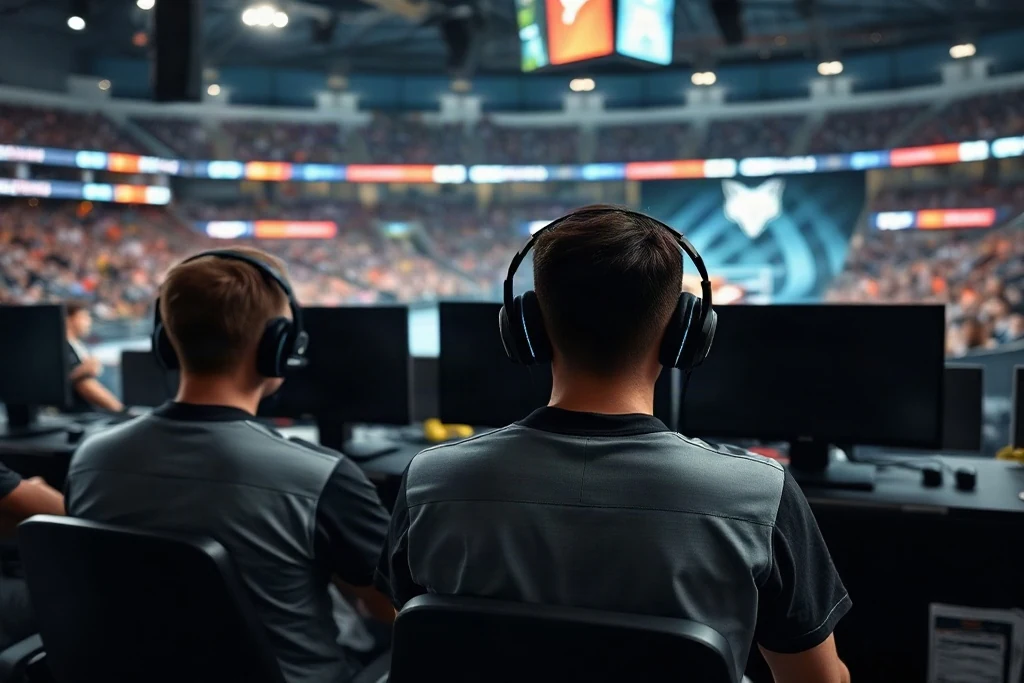
Live Betting and Stream Latency
Esports in-play markets settle against the official server feed, while the public watch a stream delayed by thirty to sixty seconds. Betting live off the broadcast therefore means betting the past; the market has already priced the round you are watching. Players who bet in-play should treat the stream as atmosphere and the scoreboard feed as data, or avoid in-play entirely, which is the cheaper education.
Bankroll and Record Keeping
The variance of a best-of-one upset exceeds almost anything in traditional sport, so unit sizing should be conservative: one percent of bankroll per selection, flat, while the record builds. Log entries with the closing line as in any sport; beating the close on tier-two CS2 is a stronger edge signal than on a Premier League match, because the market is thinner and slower to absorb information.
Keeping Esports in the Budget
A twenty-four-hour calendar is a temptation machine: there is always a match in some region, and the absence of nights is the absence of natural stopping points. The account's deposit and loss limits do the job the calendar will not, and a weekly review of the betting record replaces the illusion of activity with the arithmetic of results. Esports rewards study more than most markets and punishes boredom-driven staking more than most, which makes structure, not intuition, the edge.

Why esports odds move faster
Esports matches produce scoring events in bursts: a round swing in CS2 or a team fight in a MOBA re-prices the match in seconds. Bookmakers suspend markets during these windows, so the live bettor competes with latency as much as with the book. Understanding suspension rhythm — when markets freeze and reopen — is a skill separate from reading the game itself.
Patch cycles add a second layer. A balance change can reshape a team's identity between tournaments, making last month's form data partly obsolete. Rosters change too: a single substitute in a five-player game shifts both firepower and coordination.
Markets worth studying first
- Map winner: the cleanest expression of team strength in CS2, less noisy than round handicaps.
- Total maps: captures series shape — clean sweeps versus grind-outs.
- First blood / first objective: high-variance props suited to small stakes only.
- Outright tournament: long horizon, sensitive to patch and roster news.
The discipline is identical to sport: budget first, information second, stake third. Esports rewards readers of patch notes and roster feeds; it punishes bettors who treat a highlight reel as form analysis.
Responsible gambling — 18+. Betting and casino games are entertainment for adults only. Set deposit and time limits before you play, never chase losses, and use self-exclusion tools if play stops being fun. Promotion terms change often — always check the current terms on the operator page.